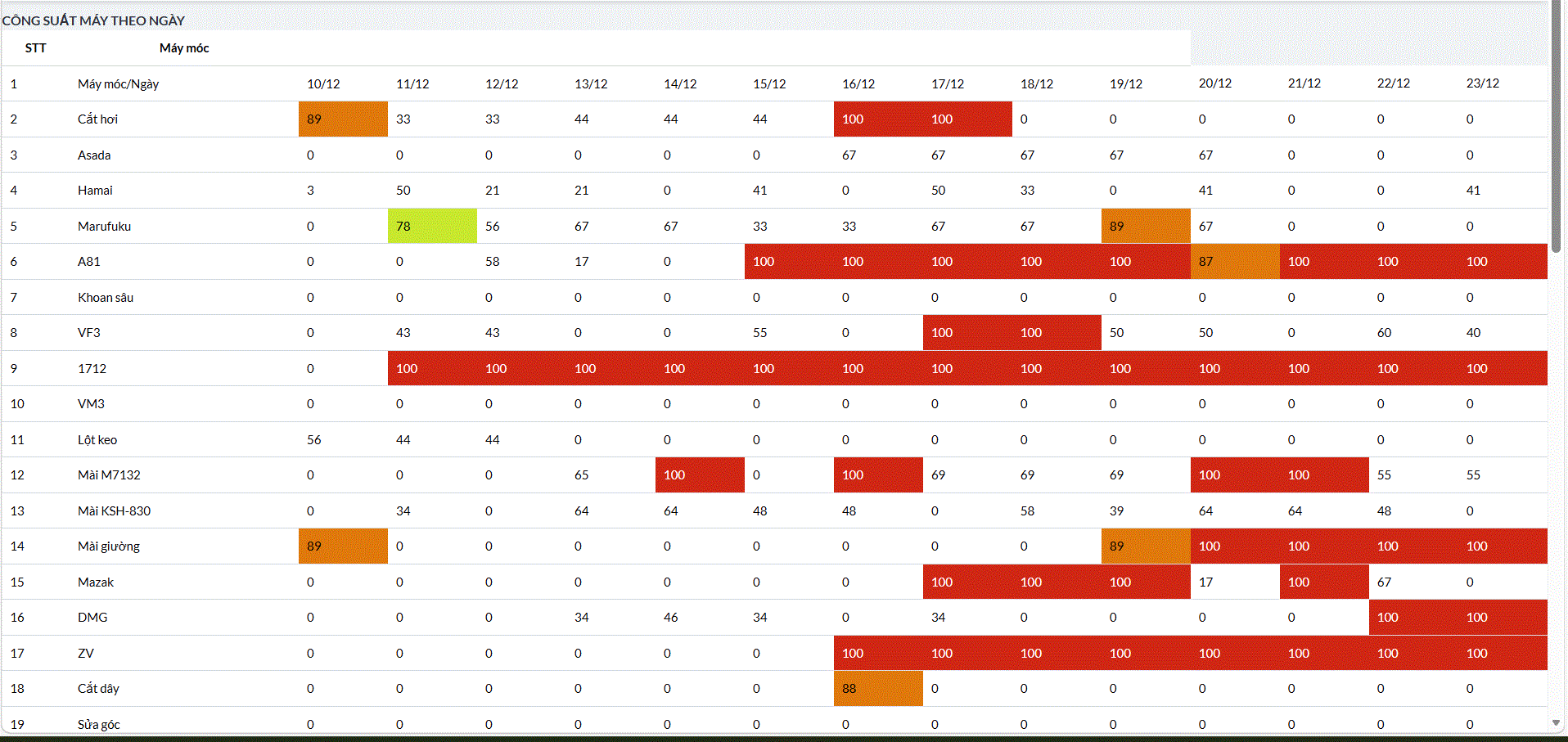

Enterprise-Wide Survey Content
Purpose:
The overall Enterprise Survey Table serves as the enterprise’s first “comprehensive X-ray” before implementing VSIC-ERP. This table helps:
+ Build a realistic implementation roadmap, prioritize essential modules, and avoid unnecessary time and customization costs.
+ Precisely identify critical bottlenecks (chronic material shortages, low OEE, excess inventory, poor OTD, outdated processes…).
+ Clearly define the gap between the current state (As-Is) and the desired state (To-Be) based on ERP best practices.
Do It Smart!
S – Specific: Objectives target concrete processes (Order Receipt, Warehouse Management, Production Planning, Progress Monitoring, Cross-Department Integration).
M – Measurable: Inventory levels, timelines, and other data are quantifiable.
A – Achievable: These goals are specific, accessible, and attainable with enterprise commitment.
R – Relevant: In the pursuit of operational performance improvement, these objectives are closely interconnected and highly relevant for analysis and enhancement.
T – Time-bound: The Board of Directors and VSIC consultants must establish appropriate timelines to achieve these goals—serving as the benchmark for measuring VSIC-ERP implementation effectiveness
|
STT |
Specific process/function |
As-Is |
To-Be |
Gap |
Decision (Change / Customize / Skip) |
Prioritize |
Responsible person |
Estimated time for repair |
Estimated cost (if customized) |
Notes / Reasons for the decision |
|---|---|---|---|---|---|---|---|---|---|---|
|
1 |
Nhận đơn hàng từ khách & chuyển cho kế hoạch |
Trưởng kinh doanh | ||||||||
|
2 |
Kiểm tra tồn kho & lập kế hoạch sản xuất |
Trưởng kế hoạch | ||||||||
|
3 |
Xử lý trường hợp thiếu nguyên liệu |
Trưởng mua hàng | ||||||||
|
4 |
Xuất kho nguyên liệu cho lệnh SX |
Thủ kho | ||||||||
|
5 |
Bắt đầu sản xuất & ghi nhận tiến độ |
Quản đốc sản xuất | ||||||||
|
6 |
Theo dõi tiến độ lệnh SX & cảnh báo trễ hạn |
PM dự án | ||||||||
|
7 |
Tích hợp với các bộ phận khác (QC, Bảo trì) |
Key user QC & Bảo trì |
Detailed Survey Content for the Production Department
Purpose:
Unlike the general enterprise-wide survey content, the detailed Gap Analysis table for the production department serves as a “specialized X-ray” of the production line—enabling precise identification of critical bottlenecks: delayed production order approvals, manual completion recording, low OEE, unclear downtime causes, latent quality defects… This forms the basis for building an optimized production process roadmap based on ERP best practices, ensuring the VSIC-ERP implementation is focused, requires minimal customization, and delivers the highest effectiveness.
Do It Smart!
|
STT |
Specific process steps |
As-Is (Current ) |
(As-Is – Average time) |
Current tools/methods |
Pain Point |
To-Be (Desired process on ERP) |
Gap (Key distance) |
Decision (Change / Customize / Skip) |
Prioritize |
Responsible person |
Estimated time for repair |
Estimated cost (if customized) |
Notes / Reasons for the decision |
|---|---|---|---|---|---|---|---|---|---|---|---|---|---|
|
1 |
Nhận lệnh sản xuất từ bộ phận kế hoạch |
Zalo + giấy tờ + sổ tay |
Chậm nhận lệnh, dễ mất thông tin khi Zalo nhiều tin nhắn, không có traceability |
Thay đổi quy trình công ty |
Cao |
Trưởng kế hoạch |
Tháng 5/2026 |
Ưu tiên cao vì ảnh hưởng OTD | |||||
|
2 |
Kiểm tra tồn kho nguyên liệu & vật tư cho lệnh SX |
Excel + sổ tay |
Không realtime → thường thiếu đột xuất hoặc ứ đọng, lập kế hoạch không chính xác |
Thay đổi quy trình công ty |
Cao |
Trưởng kế hoạch |
Tháng 5–6/2026 |
MRP là core module ưu tiên | |||||
|
3 |
Xử lý trường hợp thiếu nguyên liệu |
Zalo + điện thoại |
Thiếu đột xuất → dừng sản xuất, không có cảnh báo tự động |
Thay đổi quy trình công ty |
Cao |
Trưởng mua hàng |
Tháng 6/2026 |
Tích hợp cảnh báo Zalo/app | |||||
|
4 |
Tạo lệnh sản xuất & phân công cho tổ/máy |
Excel + giấy tờ |
Thủ công, chậm phê duyệt, dễ mất lệnh, không theo dõi được realtime |
Customize nhẹ (workflow phê duyệt) |
Cao |
PM dự án |
Tháng 6/2026 |
Thêm bước duyệt điện tử | |||||
|
5 |
Setup máy & chuẩn bị sản xuất |
Thủ công |
Setup lâu → giảm năng suất khi đơn hàng nhỏ lẻ, dễ sai setup |
Thay đổi quy trình công ty |
Cao |
Quản đốc sản xuất |
Tháng 7/2026 |
Checklist digital + preset dao | |||||
|
6 |
Theo dõi tiến độ sản xuất trong ca |
Sổ tay + đi kiểm tra |
Không realtime → không biết máy nào chậm, phải hỏi liên tục |
Thay đổi quy trình công ty |
Cao |
Quản đốc sản xuất |
Tháng 7/2026 |
App mobile cho operator ghi nhận | |||||
|
7 |
Phát hiện & xử lý lỗi sản phẩm trong quá trình |
Sổ tay + QC thủ công |
Lỗi phát hiện muộn → rework nhiều, lãng phí nguyên liệu |
Thay đổi quy trình công ty |
Cao |
Trưởng QC |
Tháng 7–8/2026 |
In-process QC realtime | |||||
|
8 |
Ghi nhận hoàn thành sản phẩm & cập nhật tồn kho |
Sổ tay + Excel |
Mất thời gian, dễ sai số lượng, tồn kho không cập nhật kịp thời |
Thay đổi quy trình công ty |
Cao |
Key user sản xuất |
Tháng 7/2026 |
Tích hợp app mobile | |||||
|
9 |
Bàn giao sản phẩm hoàn thành cho kho hoặc khách hàng |
Phiếu giấy + sổ tay |
Thủ công, dễ sai số lượng, không traceability |
Thay đổi quy trình công ty |
Trung bình |
Quản đốc sản xuất |
Tháng 8/2026 |
Quét mã bàn giao | |||||
|
10 |
Theo dõi OEE & downtime máy trong tổ |
Không có |
Không biết máy nào hiệu suất thấp → khó cải thiện OEE |
Thay đổi quy trình công ty |
Trung bình |
Quản đốc sản xuất |
Tháng 8/2026 |
OEE realtime trên app |
Try It to Feel the Difference!
Demo of Preliminary Schedule Planning – Option 1
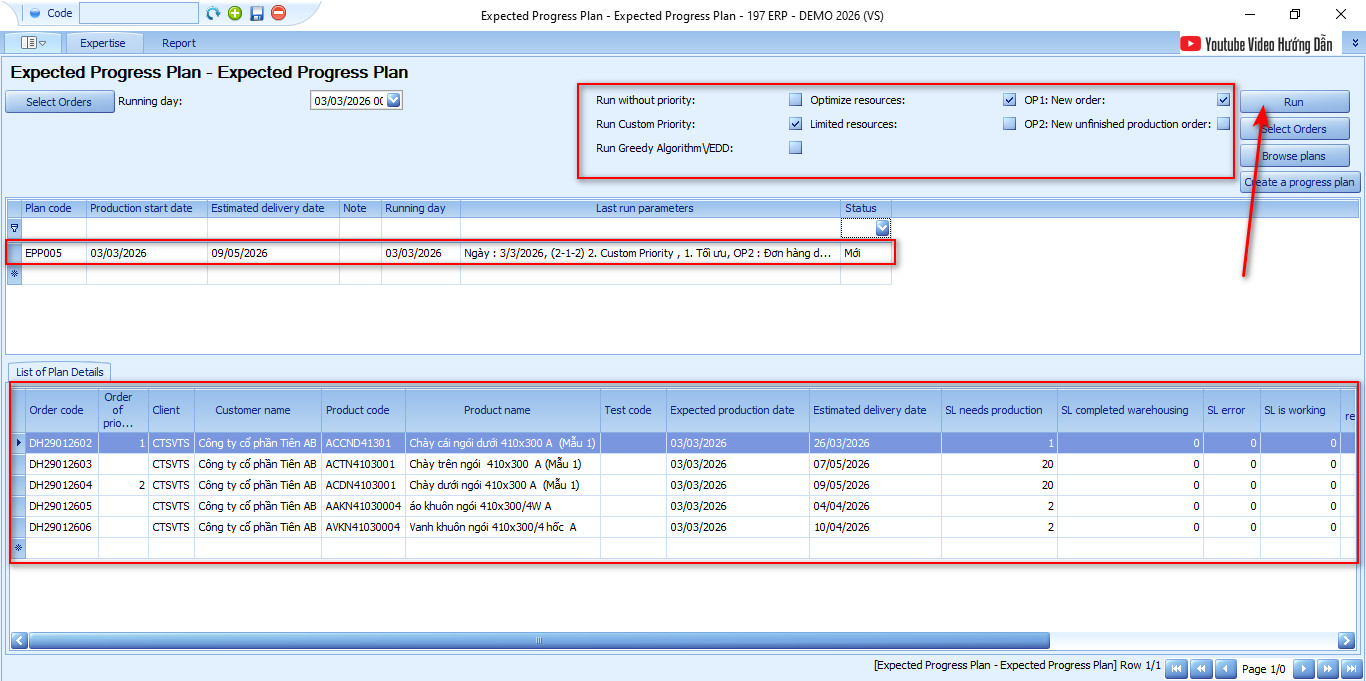
1. Meaning :
To enhance user experience and intuitiveness, VSIC-ERP directly encourages users to test Option 1 of the Projected Schedule with the following characteristics: This option is designed to ensure users can test the Projected Schedule an unlimited number of times (n times) to select the desired production schedule.
+ The production schedule of ongoing orders remains unchanged, and the assigned delivery dates for these orders are also unchanged.
+ New orders will utilize remaining unmobilized resources flexibly to avoid impacting the confirmed delivery schedule.
2. Report on the expected progress
Let’s say there are 3 orders currently in production: We don’t want to change the production plan when a new order comes in.

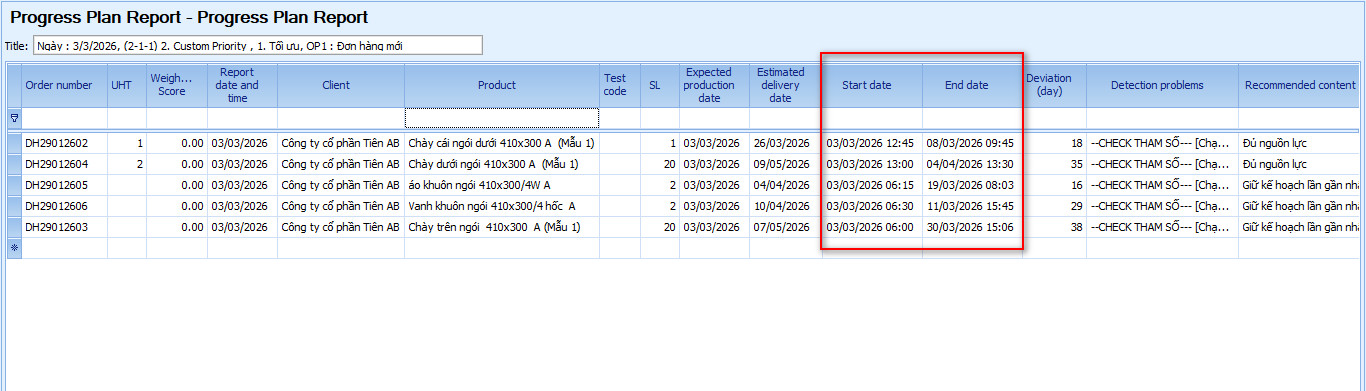
Meaning:
This report is extremely important in helping businesses determine whether the current trial production schedule has reached its optimal point. Based on the information in this report, businesses can know: + The production progress of ongoing orders will remain unchanged. + New orders will utilize remaining unmobilized resources flexibly to avoid affecting the confirmed delivery schedule. + The actual time an order is put into production (if applicable) and the completion time, and the time difference compared to the proposed delivery date in the contract. + In-depth analysis in the report also shows how orders are using resources, whether they are efficient or not. The report will automatically suggest (but not implement on behalf of the user) options for overtime, machine hours, and appropriate times for purchasing raw materials… Whether or not to change input resource parameters is entirely at the user’s discretion; VSIC-ERP only suggests but is not allowed to implement changes on behalf of the user.
Result :
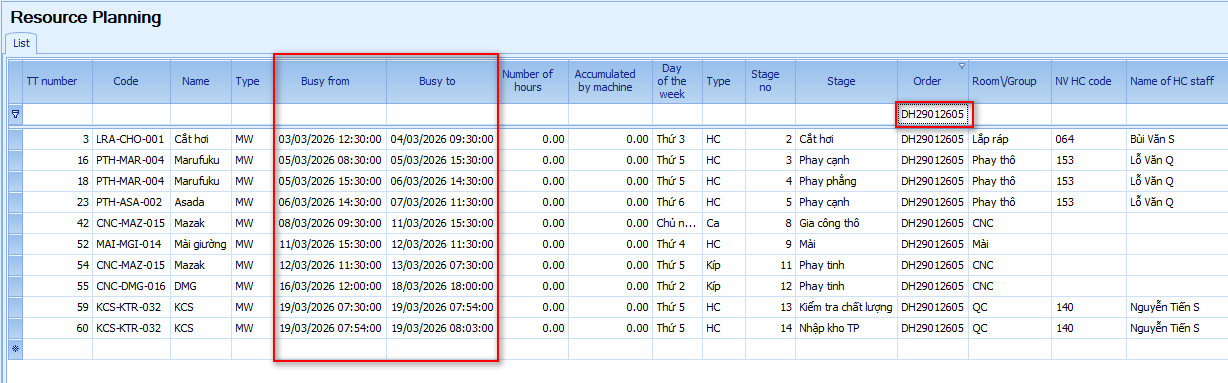
3. Resource planning
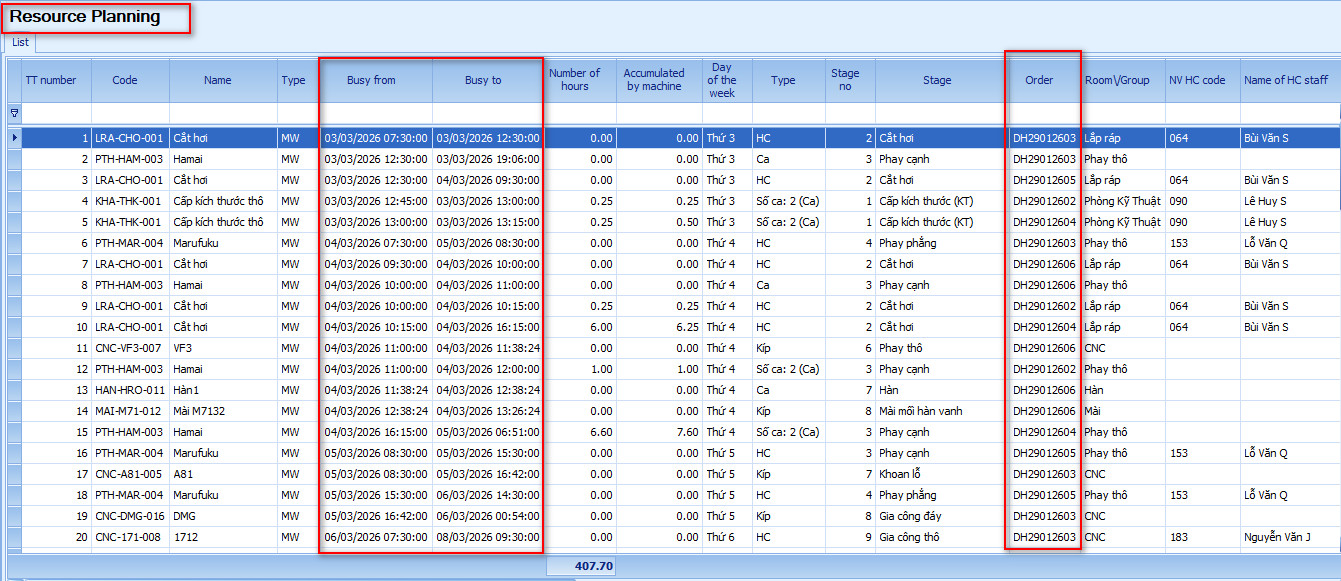
Meaning:
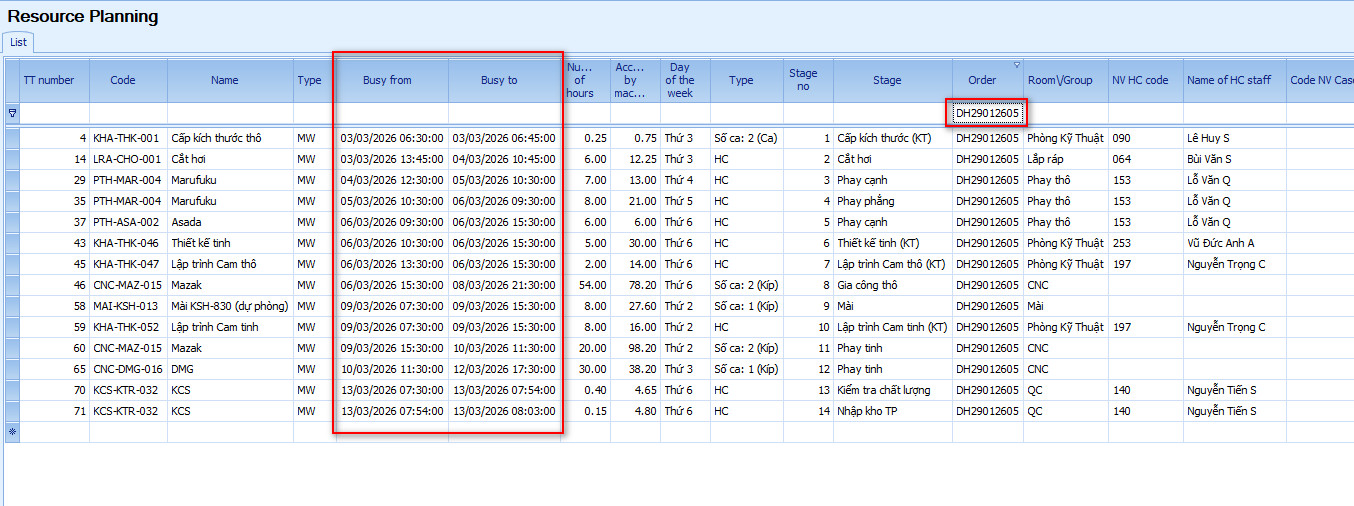
The direct result of selecting the proposed schedule, accepting or changing the input parameters of resources according to the proposed schedule inspection report, is the Resource Plan. + With the Resource Plan, users have information about the entire production plan. + In chronological order, when will the orders begin production and when will they end? + What stages are included in the production process of each order, when does it start on which machine, and when does it end on which machine? + Which production departments and workers will operate the machines involved in the production process of a specific order? Should the production process be replaced or adjusted for optimization? + If this Resource Plan is accepted, how will the entire production schedule, management of machining defects, warranty, maintenance of machinery and equipment, and timekeeping be detailed and managed?
Example:
The following is detailed information about an order for the user to easily view
Demo of Preliminary Schedule Planning – Option 2
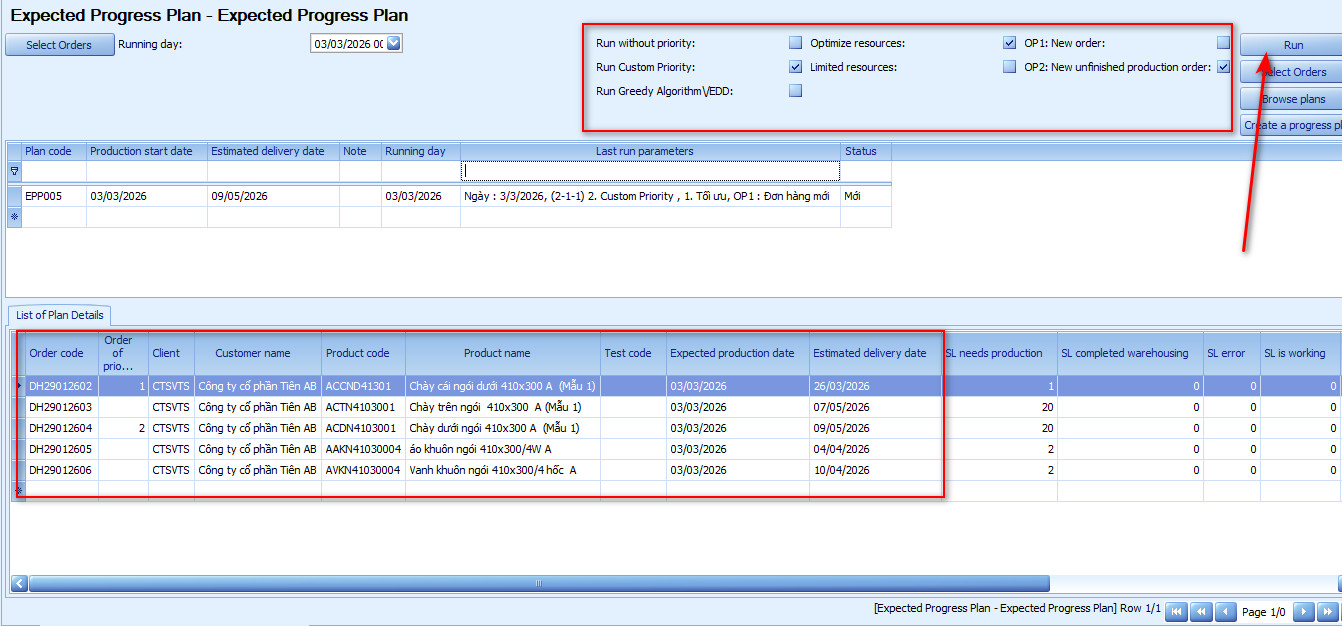
1. Meaning
To enhance user experience and intuitiveness, VSIC-ERP directly encourages users to test Option 1 of the Projected Schedule with the following characteristics: This option is designed to ensure users can test the Projected Schedule an unlimited number of times (n times) to select the desired production schedule.
+ The production schedule of ongoing orders remains unchanged, and the assigned delivery dates for these orders are also unchanged.
+ New orders will utilize remaining unmobilized resources flexibly to avoid impacting the confirmed delivery schedule.
2. Report on the expected progress
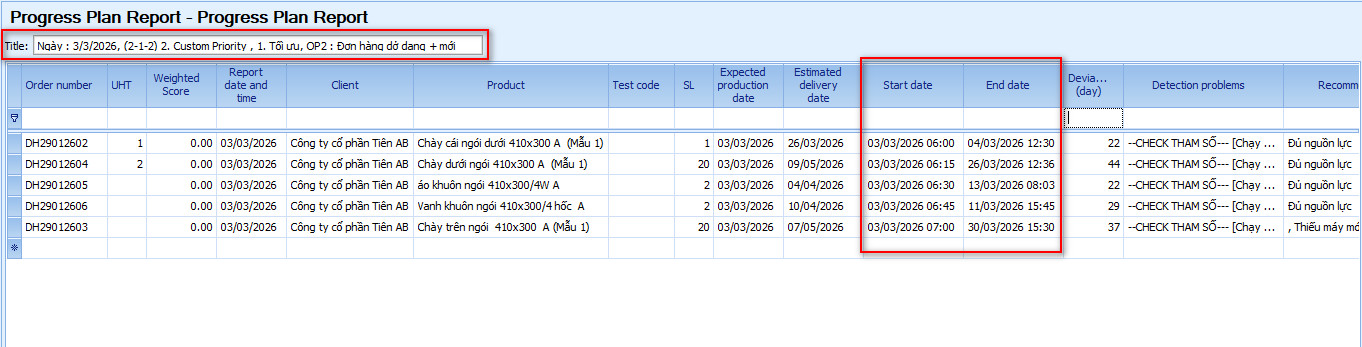
Meaning:
This report is extremely important in helping businesses determine whether the current trial production schedule has reached its optimal point. Based on the information in this report, businesses can know:
+ The production progress of ongoing orders will remain unchanged.
+ New orders will utilize remaining unmobilized resources flexibly to avoid affecting the confirmed delivery schedule.
+ The actual time an order is put into production (if applicable) and the completion time, and the time difference compared to the proposed delivery date in the contract. + In-depth analysis in the report also shows how orders are using resources, whether they are efficient or not. The report will automatically suggest (but not implement on behalf of the user) options for overtime, machine hours, and appropriate times for purchasing raw materials… Whether or not to change input resource parameters is entirely at the user’s discretion; VSIC-ERP only suggests but is not allowed to implement changes on behalf of the user.
Result :
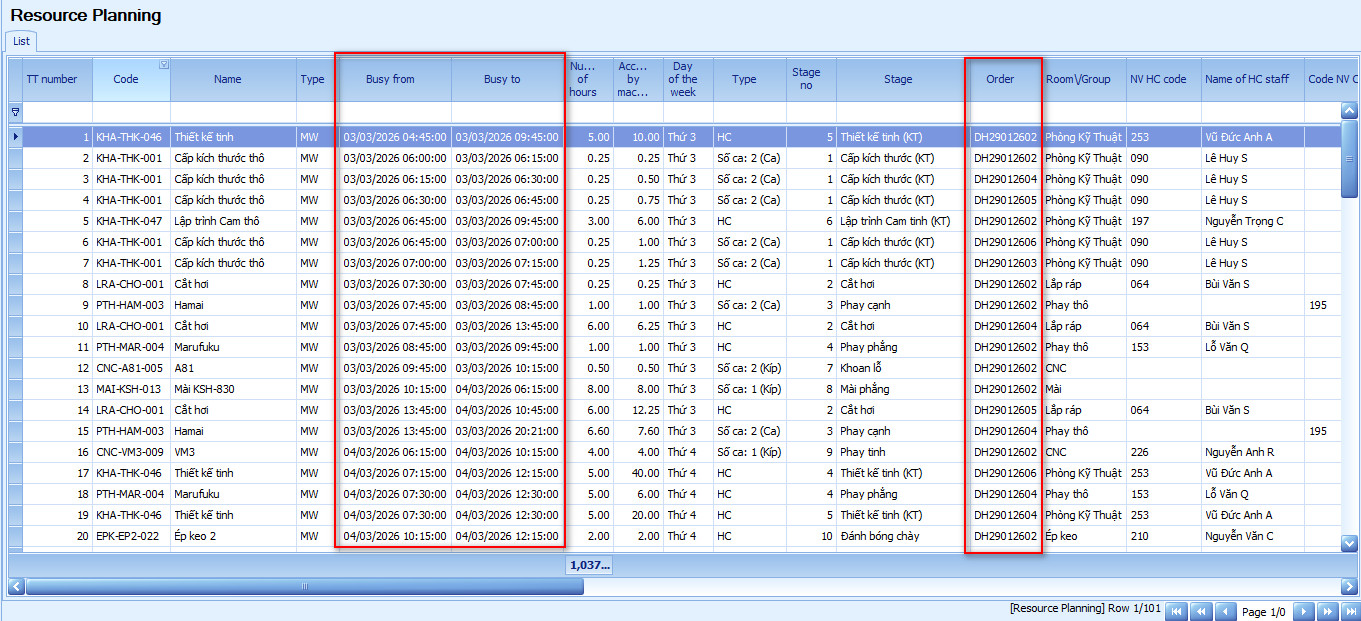
3. Resource planning
Meaning:
The direct result of selecting the proposed schedule, accepting or changing the input parameters of resources according to the proposed schedule inspection report, is the Resource Plan.
+ With the Resource Plan, users have information about the entire production plan.
+ In chronological order, when will the orders begin production and when will they end?
+ What stages are included in the production process of each order, when does it start on which machine, and when does it end on which machine?
+ Which production departments and workers will operate the machines involved in the production process of a specific order? Should the production process be replaced or adjusted for optimization?
+ If this Resource Plan is accepted, how will the entire production schedule, management of machining defects, warranty, maintenance of machinery and equipment, and timekeeping be detailed and managed?
Example:
The following is detailed information about an order for the user to easily view
Impressions After Testing Both Options
VSIC-ERP is engineered to meet the most stringent requirements of mechanical manufacturing and machining. With a deep and nuanced understanding of the unique, precise demands across diverse production and machining processes—spanning a wide range of equipment from simple to highly complex—we commit to delivering invaluable customizations in the design and management of mechanical manufacturing and machining operations. The two test options demonstrated above represent only the most basic capabilities.
Now, everything ultimately depends on the enterprise’s own determination to change. Once again, VSIC reaffirms our commitment alongside you: Do It Smart!
Option 1:
- Maintain stable delivery plans in accordance with existing commitments.
- Accept that new orders will only utilize remaining unallocated resources due to lower priority compared to ongoing orders with fixed delivery dates.
- The plan’s optimization level is not as high as in Option 2.
Option 2:
- Establish a new delivery schedule to replace the existing one.
- Recalculate progress for both ongoing (in-process) orders and new orders to achieve optimal resource utilization.
- Apply the SMART framework to avoid back-and-forth negotiations with customers when delivery deadlines change.