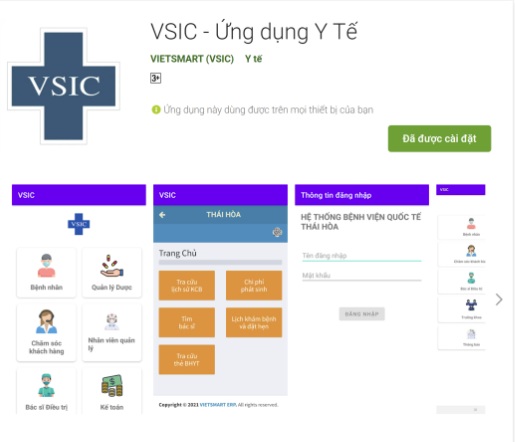

Introduction to HIS-ERP Software for Healthcare
In early 2016, immediately following the completion of an M&A transaction for a general hospital in the Mekong Delta region and facing the opportunity to participate in building and managing a new chain of healthcare facilities, VSIC, together with a major foreign investment fund in Vietnam and the hospital’s Board of Directors, discussed the need for a new hospital management software capable of meeting professional management requirements from multiple stakeholders. Several domestic and international software companies were invited to present their products. Foreign hospital management software offered strong data architecture and logical structure but was extremely difficult to customize to the real-world operations of Vietnamese hospitals and had not been practically applied. Domestic software was mostly upgraded from specialized or general clinic management systems, with inconsistent clinical processes due to poor linkage between IT teams and medical professionals.
Following the S.M.A.R.T principle, VSIC’s requirement was that the hospital management software must meet the needs of at least six stakeholder groups:
- Patients and the Community
- Medical Professional Departments of the Hospital
- Support Departments (non-clinical)
- Hospital Management (Board of Directors, Department Heads…)
- Shareholders (Investors), Partners, Equipment Placement Partners, Business Collaborators…
- Regulatory Authorities (Ministry of Health, Department of Health, Social Insurance Agency…)
After multiple trials, we decided to build a hospital management system model comprising:
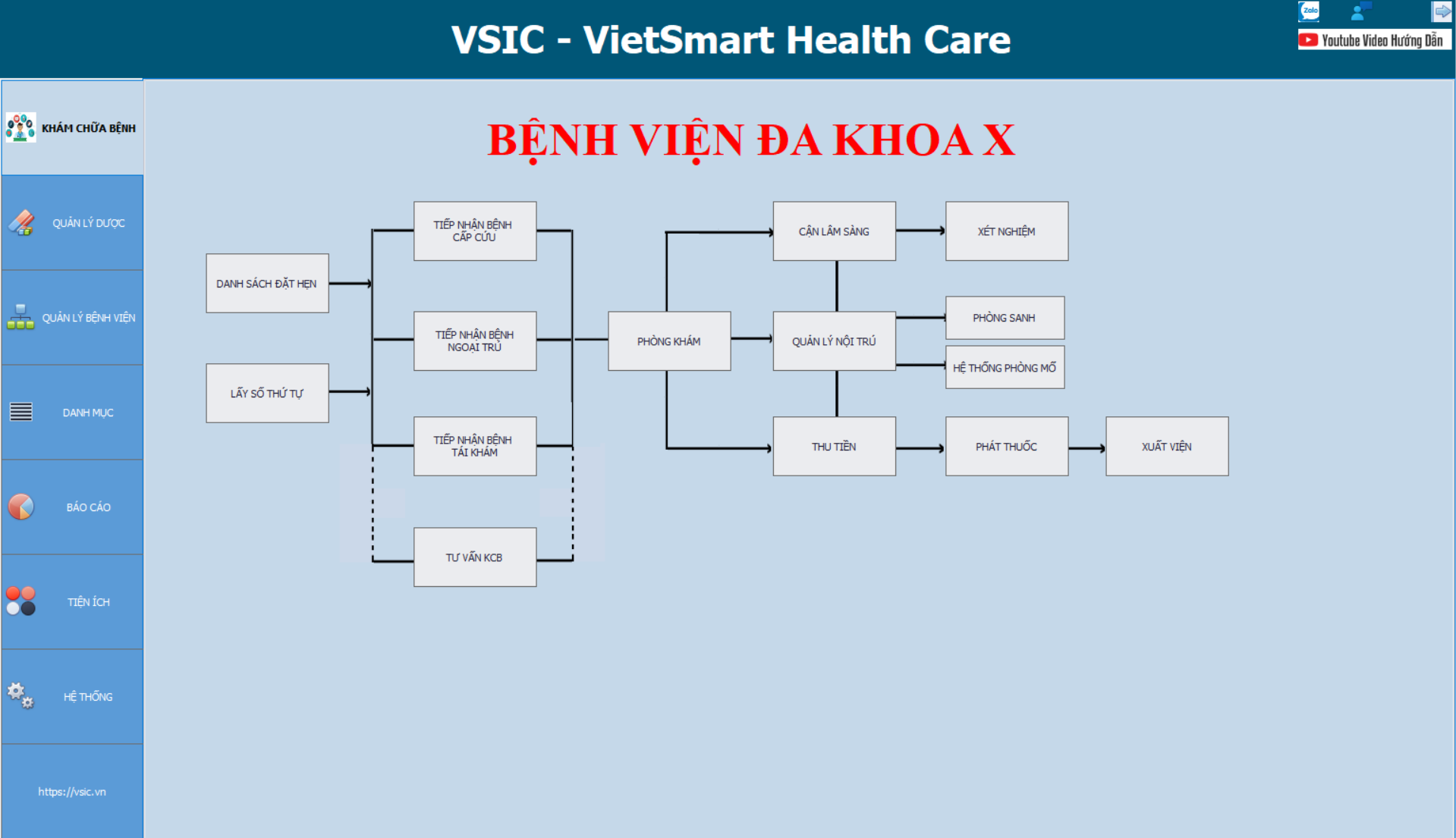
- VSIC Health Care software – a typical HIS serving clinical examination and treatment, fully digitized to eliminate paper documents.
- VSIC ERP software – a healthcare-specific ERP for managing non-clinical operations such as investment management, project management, financial planning, financial and management accounting, human resources, training and recruitment, logistics—particularly warehouse management, fixed assets, medical equipment, and machinery. The VSIC ERP database also supports market analysis for healthcare services, pharmaceuticals, medical supplies… as well as tools to evaluate the professional capabilities of medical staff within the system. With the current ERP, we can manage two hospitals and several clinics as independent yet interconnected branches, enabling real-time coordination and data aggregation according to management needs.
- Website and WebApp system to provide real-time information, prioritizing patients (access to prescriptions, test results, treatment history, visit costs, online appointment booking by department or doctor… receiving treatment guidance notifications via mobile phone…), real-time management information for nurses, doctors, department heads, and immediate business performance data (revenue, collections, bed occupancy rates…) for the Board of Directors and other specific requirements.
The VSIC Health Care system has significantly reduced the burden on clinical departments by minimizing administrative tasks that are not the core strength of nurses and doctors, easing the load on support departments through early error control and full automation of time-consuming, repetitive operations… It enables management to quickly and timely access clinical and operational data for decision-making without multiple intermediate layers. Above all, VSIC Health Care enhances patient satisfaction by providing complete necessary treatment information, in many cases allowing patients to actively participate in monitoring related care activities.
Hospital Information System
To successfully manage and operate a hospital, activities are typically divided into two distinct yet mutually influencing areas as follows:
Clinical Operations Area. This encompasses all activities related to patient reception, care, examination, treatment, monitoring, and post-treatment follow-up (both outpatient and inpatient). In VSIC’s management model, this area is handled by VSIC Healthcare (HIS). In practice managing and operating private hospitals in Vietnam, we consider this division appropriate. We propose a Chief Medical Officer (CMO) to lead clinical operations. The CMO must possess deep medical expertise to efficiently and safely manage clinical examination and treatment activities.
- Reception and Treatment for Outpatients
- Reception and Treatment for Inpatients
- Patient Monitoring and Care
- Post-Discharge Care
- Management of Social Health Insurance (BHYT) and Service Activities
- Management of Medical Equipment and Devices
- Management of Pharmaceuticals and Medical Supplies
- Management of Clinical Operations
Healthcare ERP System
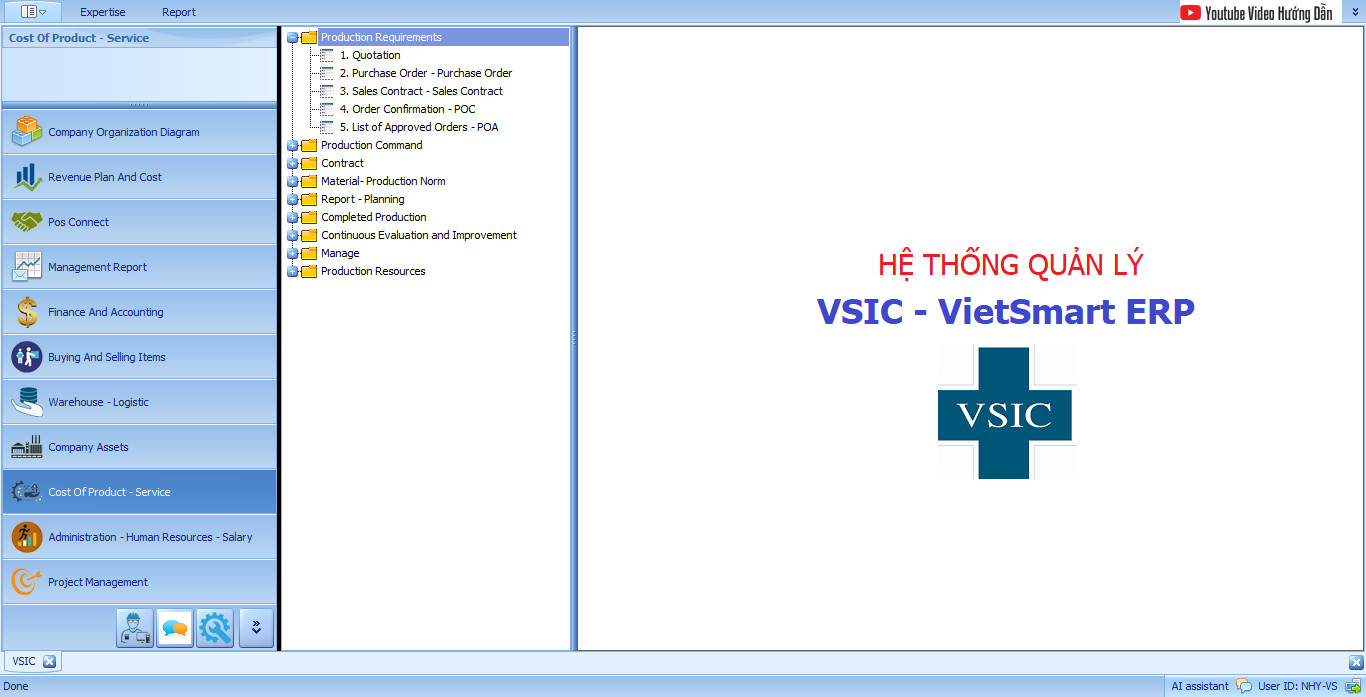
Non-Clinical Operations Area. This encompasses all remaining activities, primarily administrative paperwork, reporting, warehouse management, finance, accounting, warranty, maintenance, compliance checks… (according to surveys, these currently occupy 70%–85% of hospital staff working time—a significant waste of professional time that negatively impacts the quality of patient care).
To sustain and develop the hospital as a true social enterprise within VSIC’s management model, we recommend using VSIC ERP and propose that the leader of this area be a Chief Operating Officer (COO). The COO requires deep and broad knowledge in managing the hospital’s resources (financial-accounting management, warranty and maintenance services for facilities and equipment, human resources management, IT systems management, daily operations management…) without necessarily being a medical professional.
- Warehouse Management
- Administrative and Human Resources Management
- Procurement, Sales, and Logistics Management
- Financial and Accounting Management
- Investment Activity Management
- Medical Equipment Warranty and Maintenance
- Management Facility Repair and Maintenance Management
- Marketing Activity Management
Detailed Information (Patient/Doctor WebApp, Financial/Warehouse/Equipment Management)
The Website and WebApp system truly provides and supports the primary stakeholders—Patients, Doctors, and Healthcare Staff across branches—through unique and innovative features:
- View complete medical treatment information for each patient, including full treatment history across all branches in the system (diagnoses, prescriptions, treatment plans, costs, etc.).
- Enable online appointment booking and online consultation for patients.
- Provide timely and necessary information related to medical treatment and care across branches.
- Allow doctors to remotely monitor the treatment status and care progress of individual patients, supporting better patient care compared to previous methods.
- Provide healthcare staff with real-time information on patient reception, appointment scheduling, outpatient/inpatient status, treatment beds… via app, facilitating patient arrangement, management, and other related tasks. Create tight integration between clinical staff (performing or supporting treatment) and support departments such as Pharmacy, Transportation, and Customer Service. Enable doctors and managers to monitor treatment and care status across departments and rooms via app, ensuring readiness for any situation. Give the Hospital Board of Directors all necessary online information for effective hospital management.